
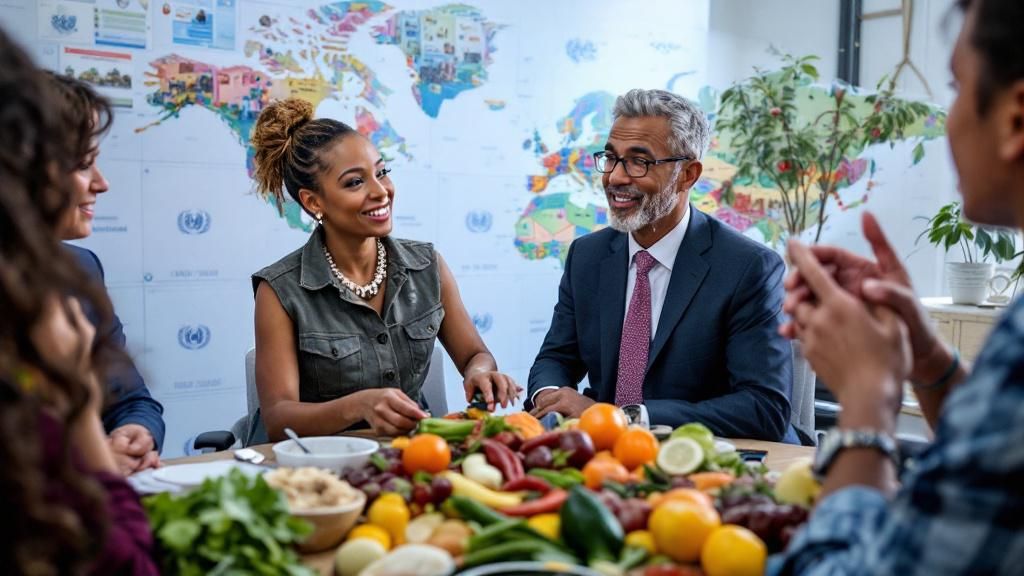
The United Nations has unveiled an far-reaching initiative created to combat the ongoing worldwide crises of poverty and hunger that keep impacting millions across the globe. This extensive initiative marks a pivotal moment in global progress, bringing together creative solutions, substantial financial commitments, and collaborative efforts from participating nations to generate sustainable impact. The initiative confronts fundamental issues whilst offering urgent assistance, vowing to transform how the international society tackles these linked issues. Discover how this innovative strategy intends to reshape lives and build a more equitable future.
Worldwide Response to Poverty Challenges
The United Nations’ latest initiative represents a turning point in the global fight against poverty and hunger. By mobilising resources across several continents and involving both developed and developing nations, the UN seeks to establish a coordinated response that goes beyond traditional boundaries. This collaborative approach acknowledges that hunger and poverty are interconnected challenges demanding coordinated effort. The programme unites governments, NGOs, and private sector partners to ensure broad reach and sustainable outcomes across disadvantaged areas.
Member states have committed to unprecedented levels of collaborative work, committing financial support and specialist knowledge to enhance current initiatives. The programme emphasises transparency and accountability, setting specific measures to track outcomes and effectiveness. By drawing on current systems and building upon successful regional models, the UN aims to improve efficiency and reduce overlap of work. This strategic alignment ensures that resources reach those most in need whilst creating robust frameworks capable of tackling upcoming challenges successfully.
Prompt Implementation Plans
The initiative’s opening phase concentrates on urgent assistance and rapid intervention in regions experiencing severe food shortages and acute hardship. Critical food aid, clinical care, and temporary shelter programmes are being rolled out to vulnerable areas within weeks. The UN has set up rapid-response teams equipped with means to examine on-site situations and adapt measures accordingly. These pressing actions aim to save lives whilst enduring approaches are being established, ensuring at-risk communities obtain vital assistance without delay.
Financial funding channels have been optimised to speed up aid distribution to organisations on the ground working within affected areas. Local community partners and leaders are being empowered to identify key priorities and allocate funds in a streamlined manner. Training programmes for distribution personnel ensure that assistance is delivered to intended beneficiaries whilst preserving respect and cultural awareness. These swift measures serve as a connection between crisis response and long-term development, providing breathing space for communities to become more stable and commence recovery.
Sustained Strategic Goals
The strategy creates challenging goals for reducing poverty and enhancing food security over the following ten years. Strategic investments in agricultural systems, educational provision, and medical infrastructure aim to address underlying causes of poverty rather than merely treating surface-level issues. The UN has pledged to support small-scale farmers through sharing technological expertise and market access programmes, enabling them to enhance yields without harming the environment. These essential funding build pathways for societies to attain economic independence and economic self-reliance whilst protecting the environment.
Long-term success requires organisational reinforcement and capacity building within national governments and community-based entities. The programme focuses on workforce training, governance improvements, and economic diversification to establish resilient economies equipped to withstand future shocks. By encouraging business creation and advancing equitable development, the initiative aims to generate lasting job prospects. These targeted allocations constitute a significant transformation towards enabling local populations to determine their own development trajectories, ensuring enduring change beyond the programme’s scheduled duration.
Deployment and Collaborative Framework
The UN’s scheme functions via a multi-tiered implementation strategy that brings together governments, independent organisations, and private sector stakeholders. By creating regional coordination centres across Africa, Asia, and Latin America, the initiative delivers culturally appropriate responses that address specific circumstances. This decentralised approach enables rapid response capacity whilst ensuring supervision from UN headquarters. Working alongside international development banks deliver crucial financial instruments, allowing enduring infrastructure initiatives that create employment opportunities and enhance food systems systems throughout vulnerable regions.
Success is contingent upon genuine collaboration between developed and developing nations, with clear responsibility mechanisms guaranteeing resources arrive at intended beneficiaries. The framework encompasses skills development initiatives that strengthen local institutions and enable communities to become self-reliant. Ongoing oversight through external reviews and grassroots consultation mechanisms upholds programme quality and effectiveness. By fostering sustained relationships rather than temporary aid arrangements, the UN initiative aims to create fundamental reform that breaks cycles of poverty and hunger, ultimately creating resilient societies capable of long-term growth.
