
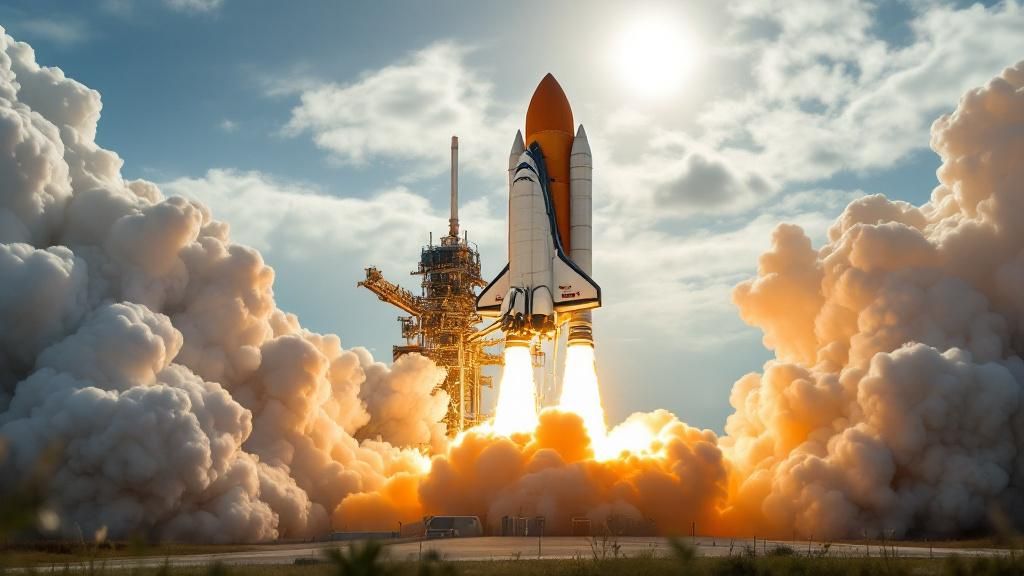
Nasa’s Artemis II crew has formally begun a historic ten-day mission circling the Moon, blasting into space in what marks a major achievement for the agency’s far-reaching deep-space exploration programme. The manned vehicle, which lifted off from Florida, will not land on the Moon’s surface but instead circle the Moon whilst venturing further from Earth than any human has previously travelled before. This mission comes after the successful unmanned Artemis I flight in 2022 and constitutes a crucial stepping stone towards Nasa’s ultimate goal of establishing sustained Moon exploration and ultimately arriving at Mars in the 2030s. The journey underscores humanity’s fresh dedication to extending the limits of space exploration and readying for the challenges of interplanetary travel.
A New Era of Deep Space Exploration
The Artemis II mission marks a pivotal turning point in humanity’s renewed engagement with lunar exploration after a period exceeding fifty years since the Apollo programme ended. By venturing further from Earth than any previous human spaceflight, the astronauts will obtain crucial information on radiation exposure, life support systems, and crew performance in deep space—essential data that will inform future missions. This bold initiative reflects Nasa’s confidence in its updated spacecraft and launch vehicles, which have been substantially redesigned and improved since the Apollo programme era. The mission’s accomplishment will confirm the agency’s technical capabilities and enhance international confidence in its plan for sustained space exploration.
Beyond the direct scientific objectives, Artemis II serves as a testament to global collaboration and technological advancement. The mission expands on decades of experience gained from the International Space Station and incorporates insights gained from multiple automated lunar probes. Achievement will not only inspire a new generation of scientists and engineers but also pave the way for setting up a permanent lunar base and eventual human missions to Mars. The crew’s journey around the Moon will seize the world’s imagination whilst advancing humanity’s understanding of our place in the cosmos and our ability to venture into distant worlds.
- Crew will journey further from Earth than any human previously
- Mission obtains critical deep-space radiation and life support data
- Validates upgraded spacecraft systems in preparation for future lunar missions
- Establishes foundation for Mars exploration during the 2030s
The Mission Profile and Research Goals
Ten-Day Journey Around the Moon
The Artemis II mission will take place across a carefully planned decade-long voyage that transports the team on a circumlunar trajectory without touching down on the lunar surface itself. During this period, the astronauts will carry out comprehensive examinations of the Moon’s terrain, testing communication systems and guidance protocols that will prove essential for future landing missions. The crew will conduct essential servicing on the spacecraft whilst moving around Earth’s natural satellite, obtaining measurements on how the vehicle functions in the demanding environment of deep space. This methodical approach allows Nasa to verify essential equipment before committing to the more complex challenge of a crewed lunar landing in subsequent missions.
Throughout the ten-day journey, the crew will document their experiences through photography, video, and scientific data collection that will improve our comprehension of the lunar environment. The longer timeframe of the mission offers unique chances to examine the mental and physical impacts of deep-space travel on human astronauts. Every finding, every system check, and every reading contributes to a growing database of information that will guide the design and execution of upcoming Artemis programmes. The mission constitutes a deliberate, methodical advancement towards our final objective of sustained lunar exploration.
Achieving Distance Records
The Artemis II crew will travel deeper from Earth than any human being has ever travelled, exceeding the distance records set during the Apollo 13 mission in 1970. This extraordinary achievement underscores the progress in spaceflight technology and the renewed ambition driving modern space exploration. As the spacecraft follows its path around the moon, the astronauts will experience the profound isolation of deep space whilst maintaining constant communication with mission control on Earth. Breaking this significant distance achievement carries profound importance, marking humanity’s return to the outer reaches of our planetary neighbourhood after over five decades.
The unprecedented distance will subject the crew to radiation levels significantly higher than those encountered in low Earth orbit, delivering crucial data on shielding effectiveness and health risks associated with deep-space travel. Understanding these hazards is essential for developing protective measures for extended expeditions to Mars and beyond. Scientists will track the crew’s exposure carefully, using the mission as a natural experiment in human adaptation to the extreme conditions of deep space. This information will be crucial for designing safer spacecraft and developing medical protocols for future space travellers venturing even more distant from home.
Expanding on Artemis I Success
The Artemis II mission represents a key advancement in NASA’s extensive moon exploration initiative, drawing from the accomplishments of its uncrewed forerunner, Artemis I, which launched in 2022. That inaugural mission confirmed the Space Launch System rocket and Orion spacecraft, proving their ability to function safely in the severe conditions of deep space. The data collected during Artemis I’s uncrewed circumlunar flight provided engineers with essential understanding into spacecraft operation, thermal management, and navigation systems. With these foundational lessons learned, NASA has refined and enhanced the spacecraft systems, clearing the path for human crews to safely undertake the more sophisticated Artemis II mission.
The advancement from Artemis I to Artemis II exemplifies the systematic strategy NASA has established for its deep-space exploration programme. Rather than fast-tracking crewed operations, the agency focused on thorough validation and verification of every component in actual space conditions. This careful, data-driven approach has instilled confidence in scientists and the public alike that the programme can be conducted with safety. The success of Artemis I effectively transformed the Artemis mission from conceptual planning into operational reality, confirming that humanity has the technical means to send humans back to the Moon and push into deeper space.
| Mission | Key Achievement |
|---|---|
| Artemis I (2022) | Successful uncrewed circumlunar flight validating Space Launch System and Orion spacecraft |
| Artemis II (2025) | First crewed lunar mission with crew travelling further from Earth than ever before |
| Artemis III (planned) | Crewed lunar landing with astronauts returning to the Moon’s surface |
The Path towards Mars and the stars beyond
Whilst Artemis II attracts media attention as a remarkable achievement in its own right, NASA views this mission as a critical waypoint on a considerably more ambitious trajectory. The primary goal of the Artemis programme extends well beyond lunar exploration; it reflects humanity’s purposeful advance towards Mars. By the 2030s, NASA aims to establish the specialised capabilities, operational protocols, and life-support systems necessary for crewed missions to the Mars. Each mission in the Artemis sequence—from the uncrewed Artemis I through the planned lunar landings of Artemis III and beyond—delivers vital insights that will directly inform and enable forthcoming deep space exploration. The experience acquired from working in the lunar environment will be tremendously valuable when astronauts eventually embark on the far more difficult journey to Mars.
The strategic importance of the Moon within this wider framework is difficult to overstate. NASA envisions the Moon not merely as a destination, but as a preparation centre and potential staging point for missions to deep space. Upcoming lunar facilities could serve as locations to assessing advanced propulsion systems, executing extended extravehicular activities, and developing techniques for resource utilisation in non-Earth locations. By perfecting operations on the Moon—a location only three days’ travel from Earth—NASA will build the capability necessary to oversee crewed missions taking months to travel to Mars. This systematic movement from orbital space to the Moon to Mars embodies a strategically designed expansion of human capability, guaranteeing that each step develops from established achievements and minimises dangers to following, increasingly challenging undertakings.
- Artemis missions develop essential protocols for sustained human missions beyond Earth orbit
- Lunar operations serve as development platform for systems needed for Mars missions
- Long-term initiative aims to reach manned Mars touchdown by the 2030s
- Moon-based infrastructure could support future interplanetary missions and material harvesting
- Artemis programme represents our dedication to expanding exploration beyond Earth orbit
